Unlike traditional Lead-Acid battery systems that tolerate broad float charging voltages, Lithium Iron Phosphate (LiFePO4) battery chemistry demands precise potential containment. Operating at a nominal cell voltage of 3.2V, a LiFePO4 cell achieves structural saturation at 3.65V. Exceeding this boundary, even slightly, initiates localized degradation of the cathode structure, causing permanent capacity loss and potential thermal risks.
To avoid safety issues, smart high-frequency chargers employ a specialized two-stage CC/CV charging profile. During the Constant Current (CC) phase, the charger acts as a current source, delivering maximum rated current (such as 10A, 20A, or up to 60A for industrial systems) while the cell voltage rises. When the voltage hits the threshold of 3.65V per cell (e.g., 14.6V for a 12V nominal system), the charger transitions to the Constant Voltage (CV) phase. During CV, the voltage is clamped, and the current decays. The charge terminates once the current drops to a pre-defined threshold (typically C/10 or C/20).
This strict voltage management requires intelligent microcontroller integration. Modern industrial-grade chargers use high-resolution ADC (Analog-to-Digital Converter) circuits to monitor voltage fluctuations at the millivolt level, ensuring safe charging profiles that extend the pack's operational lifetime to over 3,000 to 5,000 cycles.
From automated material handling facilities in Europe to off-grid solar microgrids in Southeast Asia, industrial battery architectures are rapidly moving to LiFePO4. The reasons are clear: higher energy density, longer lifespans, zero maintenance, and low environmental impact. This shift has changed the global demand for chargers.
Standard power supplies are no longer sufficient. Today's commercial enterprises require connected charging equipment with integrated CAN bus communication (such as CANOpen or SAE J1939 protocols). This allows the battery management system (BMS) and charger to exchange real-time data regarding temperatures, individual cell voltages, and State-of-Charge (SOC). This feedback loop prevents thermal issues, optimizes cell balancing, and supports "opportunity charging"—allowing heavy-duty electric forklifts and AGVs to fast-charge during short breaks without shortening battery lifespans.
Huizhou NexBolt Charger Co., Ltd. was established in 2009 and is a professional manufacturer specializing in the research, development, production, and sales of advanced lithium battery charging solutions. Our products are widely applied in electric vehicles (EVs), electric motorcycles, e-bikes, electric sweepers, forklifts, AGVs, and various industrial and energy storage systems, meeting the diverse needs of modern electrification.
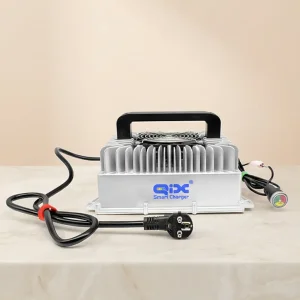
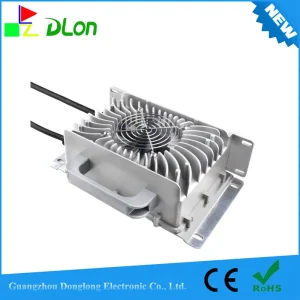
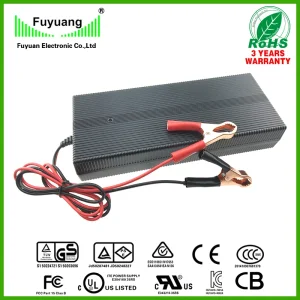
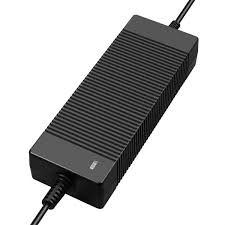
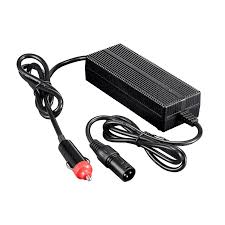
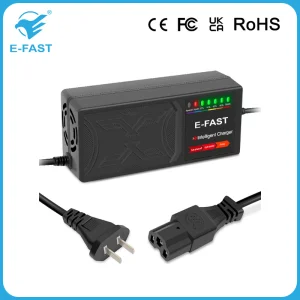
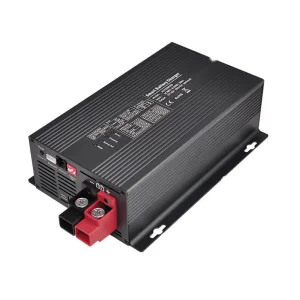
By adopting high-frequency switching power supply technology, NexBolt chargers deliver outstanding performance characterized by high efficiency (up to 99%), stable output, intelligent charging control, and enhanced safety protection. Our chargers are designed with multiple protection functions, including over-voltage, over-current, short-circuit, and over-temperature protection, ensuring reliable and safe operation under different working conditions. Featuring aluminum alloy housings, our products offer excellent heat dissipation, durability, elegant appearance, lightweight construction, and compact size, making them both portable and user-friendly.
Quality and innovation are at the core of our business. All NexBolt products comply with international standards and have obtained certifications such as CE and RoHS. We also hold a number of national patents for our independently developed technologies, demonstrating our strong R&D capabilities and commitment to continuous innovation. Our engineering team constantly works to optimize product performance, improve energy efficiency, and develop customized solutions tailored to specific customer requirements.
Over the years, Huizhou NexBolt Charger Co., Ltd. has successfully expanded its market presence across North America, Europe, Southeast Asia, and other regions, establishing long-term and stable partnerships with leading e-bike manufacturers, battery producers, and OEM/ODM clients worldwide. Through continuous investment in advanced equipment, technical expertise, and skilled personnel, we have achieved rapid growth and steadily increased our global market share.
In addition to delivering high-quality products, we place great emphasis on customer service. We provide comprehensive pre-sales consultation, flexible customization services, and responsive after-sales support to ensure customer satisfaction at every stage. With reliable product quality, competitive pricing, fast delivery, and professional service, NexBolt has become a trusted and competitive partner in the new energy industry.
Looking ahead, Huizhou NexBolt Charger Co., Ltd. will continue to focus on technological innovation and sustainable development, striving to provide efficient, intelligent, and eco-friendly charging solutions, and to contribute to the advancement of the global green energy ecosystem.
Industrial fleets running multiple shifts require high-power 24V, 48V, or 72V smart chargers. By implementing NexBolt's high-frequency charging platforms with CAN bus BMS synchronization, warehouse operations in Western Europe and North America achieve fast opportunity-charging. This eliminates the need for spare battery changeouts and minimizes warehouse downtime.
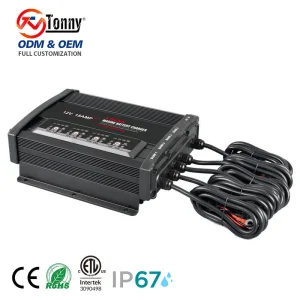
Humid, high-saline offshore environments demand exceptional ingress protection. Specialized multi-bank marine chargers with an IP65/IP67 rated aluminum alloy housing resist salt corrosion and structural vibration. NexBolt's 60A 4-bank solutions deliver independent balancing currents to separate battery banks, catering to yachts and commercial fishing vessels globally.
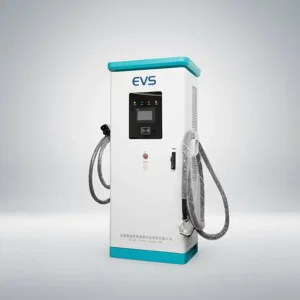
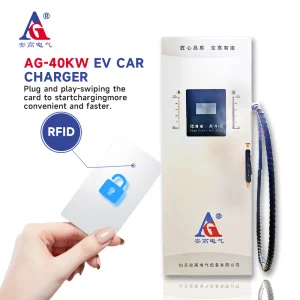
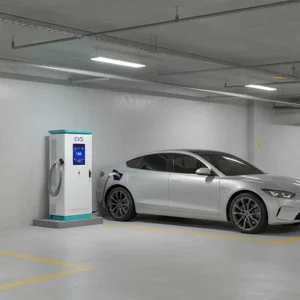
For municipal EV operations, NexBolt's 120kW DC fast charging stations with integrated 122kWh battery storage systems act as self-contained road rescue stations. These systems draw energy from low-capacity grid connections during off-peak times and deliver high-power energy to stranded vehicles on remote motorways without overloading the grid.
China leads the global production of LiFePO4 battery chargers due to its integrated supply chain. Situated in Huizhou, a key electronics manufacturing hub, NexBolt maintains close proximity to component suppliers. This proximity minimizes raw material lead times and enables fast prototyping during customization cycles.
Our factory efficiency is driven by structured, automated operations, featuring:
Advanced high-speed Yamaha SMT machines place critical power semiconductor devices and microcontrollers with micrometer accuracy, reducing thermal faults caused by manual soldering errors.
Every industrial battery charger undergoes a full-load 4-hour burn-in and high-temperature stress test. This process screens out early component failures and ensures long-term operational reliability before shipment.
Our testers perform strict leakage-current and high-voltage dielectric isolation checks, verifying that our equipment meets global standards like UL, CE, KC, PSE, and RoHS.
| Parameters | NexBolt Smart Charger Standards | Legacy Power Supplies |
|---|---|---|
| Conversion Efficiency | Up to 99% (Low heat output) | 80% - 85% (High heat output) |
| BMS Communication | CAN Bus, RS485, Bluetooth Integration | Analog / None (Voltage tracking only) |
| Enclosure Protection | Anodized Aluminum / IP67 Options | Plastic / Sheet metal (Low corrosion resistance) |
| Thermal Regulation | Automated Smart Fan / Passive Cooling | Continuous Fan (Prone to dust blockage) |
| Regulatory Certifications | CE, RoHS, KC, UL, PSE Certified | Minimal compliance (Uncertified components) |
NexBolt provides complete custom development, adapting input/output voltages, current thresholds, connector geometries, and charging software algorithms to match your battery parameters. This service is ideal for system integrators, distributors, and battery pack manufacturers worldwide.
Lead-acid batteries use different charging profiles, including desulfation pulses and high-voltage equalization stages (often exceeding 15.5V). Applying these voltages to a LiFePO4 battery will trigger BMS over-voltage protection or damage the lithium cells. LiFePO4 batteries require a dedicated CC/CV profile with a strict 3.65V per cell limit (14.6V for a 12V pack) and no float charging stage.
CAN Bus (Controller Area Network) communication allows the charger to interface with the battery management system (BMS) in real time. The BMS continuously shares information about cell temperatures and balance states, instructing the charger to adjust its output current. This preventing thermal issues and optimizes cell balancing during fast charge cycles.
NexBolt chargers utilize high-frequency switching topologies to achieve up to 99% conversion efficiency. Lower-efficiency chargers waste 15% to 20% of input power as heat. Higher efficiency reduces the unit's operating temperature, prevents component wear, and allows for compact, fanless aluminum enclosures that are ideal for dusty or harsh environments.
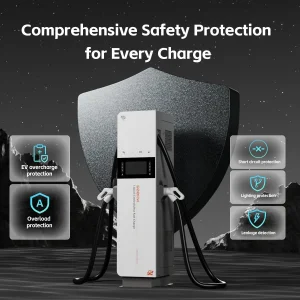
NexBolt chargers feature multi-layer safety protections, including over-voltage protection (OVP), over-current protection (OCP), short-circuit protection (SCP), reverse polarity protection, and over-temperature shutdown. If a fault is detected, the charger's microcontroller immediately cuts off current to protect the operator, battery, and charger.
Standard lithium-ion batteries should not be charged below freezing, as cold temperatures cause lithium plating on the anode, creating internal short circuits. NexBolt's intelligent chargers can interface with battery heaters or automatically reduce charging currents to safe levels (e.g., C/10 or lower) when low temperatures are detected, protecting the pack from damage.
We design our chargers to comply with international safety frameworks. We hold CE and RoHS certifications for Europe, KC listings for South Korea, and PSE compliance for Japan. In addition, we utilize certified components and undergo periodic audits of our manufacturing processes, ensuring compliance with global import and trade regulations.
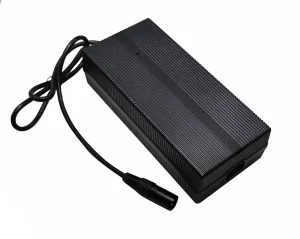
 NexBolt Charger